
The Front Door Has Moved
The buyer who used to start with Google now starts with a prompt. By the time they reach your site, the shortlist is already set.
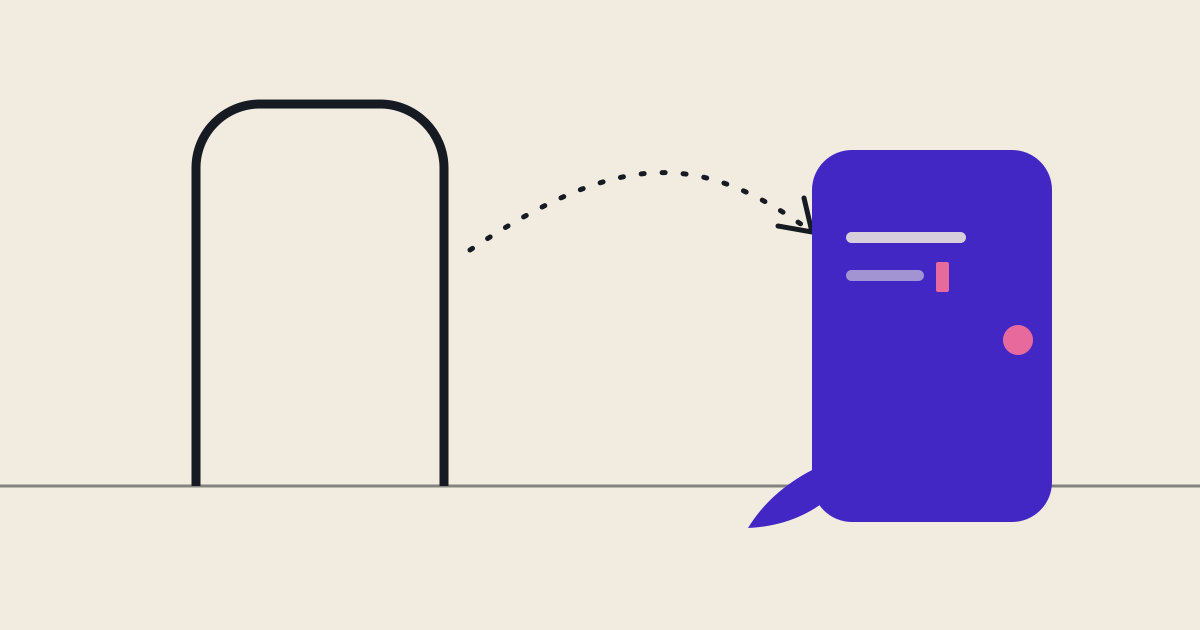
The buyer who used to start with Google now starts with a prompt. They open ChatGPT. They ask which vendors handle X. Two paragraphs come back. Three companies are named, sometimes four. The rest of the category doesn't exist as far as that buyer's decision is concerned.
This happens thousands of times a day across B2B procurement. Most companies haven't registered the shift, because their dashboards still show Google traffic and the Google traffic still converts. The dashboards aren't wrong. They're just measuring the wrong door.
Bain & Company puts the number at 80% — that's the share of users now relying on AI-generated summaries to filter complex information before they click anything. Search Engine Land reports 60% of searches end with zero clicks: the AI delivers the answer, the user moves on. EMARKETER forecasts that 31.3% of the US population will use generative AI search in 2026. Three years ago that figure was a rounding error.
Here's why this matters. The traffic that still arrives at your website in 2026 is mostly buyers who've already filtered through an AI summary somewhere upstream. The buyers who never reach you didn't lose interest — they were never told you existed.
What changed, exactly
The shift is structural, not stylistic.
Traditional search engines rank pages. AI search engines synthesize answers. Those are different operations, and they reward different things. A page can sit at #1 on Google for its category terms and still be invisible inside the AI answer that captures most of the early buyer attention. The two systems no longer agree on what counts as authoritative.
Brandlight, a firm tracking this, found that the overlap between top Google links and AI-cited sources has dropped from about 70% to under 20% in roughly 18 months. The gap is widening, not closing. AI systems have started developing their own ideas about which sources to trust — ideas that don't map cleanly to the SEO authority signals companies spent the last decade chasing.
So the strategies that built B2B search visibility through 2024 — keyword optimization, backlink building, technical SEO — haven't stopped working. They've stopped being sufficient. They handle one door. The other door, where most early consideration now happens, follows different rules.
What AI engines actually look for
Three things, mostly: clarity, structure, and authority. None of them are what marketing departments have been optimizing for.
Clarity means the content states its claims directly. Hedged marketing prose gives an AI nothing to extract. "Our solution can help organizations potentially achieve transformational outcomes through innovative approaches" is unciteable — there's no claim in it. "Companies using this approach see a 30% reduction in onboarding time, based on our 2025 survey of 200 implementations" is citeable, because it makes a specific claim someone could check.
Structure means the page is built so a machine can walk it. Clear headings. Defined sections. Logical hierarchy. The same things that make a page useful to a human reader also make it parseable to a model. Pages built for one tend to score on both.
Authority is where it gets interesting. Backlinks still count, but less than they did. What counts more: named authorship, transparent methodology, citations to primary sources, dates that prove the content is current. AI systems are trained to be cautious about hallucination, and they prefer sources that look like they'd survive a fact-check. The signals are editorial, not technical.
This is a different content discipline. SEO content can win by being technically clever about how crawlers walk pages. AI-cited content has to win by being editorially serious about how arguments get built and evidenced.
The buyer who used to start with Google now starts with a prompt
The cadence problem nobody mentions
Here's something most vendor pitches skip. AI systems don't refresh their underlying knowledge on Google's schedule — they retrain on cycles that run from weekly to quarterly, depending on the system. Anthropic refreshes Claude on one schedule. OpenAI refreshes GPT on another. Google Gemini, another still.
A company publishing one substantial piece per quarter is, for practical purposes, invisible. By the time the next piece lands, the AI systems have moved past it.
The companies winning citation share in AI answers publish at a different rhythm. Two to four substantial pieces a month seems to be where compounding visibility starts to show — below that, the signals don't accumulate. Above it, citation rates grow steadily, month by month, in ways that are visible in vendor research tools by quarter three.
For a founder running a company without a marketing team, this presents an obvious problem. Producing two to four substantial pieces a month — each carrying enough specificity and structure to be AI-citable — isn't a side project. Most founders try it, hold the line for a quarter, and quietly stop.
What to do this month
Four things, in order. None of them require new tools.
First, check what AI systems currently say about your company. Ask ChatGPT, Claude, Perplexity, and Gemini the questions a buyer would ask — Who are the leading vendors for X? What are the alternatives to Y? How should I evaluate Z? If your company isn't mentioned, that's one problem. If it's mentioned but the description is wrong, that's another. Both need editorial intervention, not technical fixes.
Second, identify the three buyer questions that actually matter — not the questions you wish buyers asked, but the ones they ask in evaluation calls, in early discovery emails, in the comments under your competitors' content. Those are the queries that generate citation opportunities in the AI search era.
Third, publish one substantive piece on each of those three questions. Substantive means: takes a clear position, supports it with specific evidence, structures the argument so a reader — or a model — can extract the key claims. This is editorial work. The closer it reads to a piece in a serious trade publication, the better it performs.
Fourth, decide what cadence you can actually hold. Two substantive pieces a month for twelve months will compound. One a quarter won't. Half-finished content programs send AI systems mixed signals about brand authority, which is worse than not starting. If the cadence isn't sustainable solo, the honest move is to find production support before launching, not after the program stalls.
The deeper shift
It's tempting to read all this as a marketing problem. It's not. It's a positioning problem.
In the Google era, a company could be quiet online and still build a business. Referrals, conferences, direct sales, paid advertising — these filled the gap. In the AI search era, online quiet compounds into invisibility in buyer consideration. When 80% of buyers filter vendor lists through AI summaries, being absent from those summaries is a structural disadvantage that the offline channels can't fully offset.
The front door has moved. The companies that walk through it earliest will be cited, trusted, and considered for years. The companies that stay at the old door will keep wondering why the pipeline is shrinking even as the product gets better.
The fix isn't complicated. It needs editorial output at a standard the AI systems recognize, published consistently enough to register. The hard part is the consistency. The standard is the standard.
Visibilio Editorial publishes weekly on the operational realities of B2B content, editorial discipline, and the businesses adapting to the shift in how buyers discover vendors. Crafted by Visibilio.ai.