
Your Audience Now Includes AI Agents: What the Bot Traffic Majority Means for Content Strategy
Bots now drive 57% of web traffic. Here's what the AI agent majority means for content visibility, new KPIs, and always-on content operations.
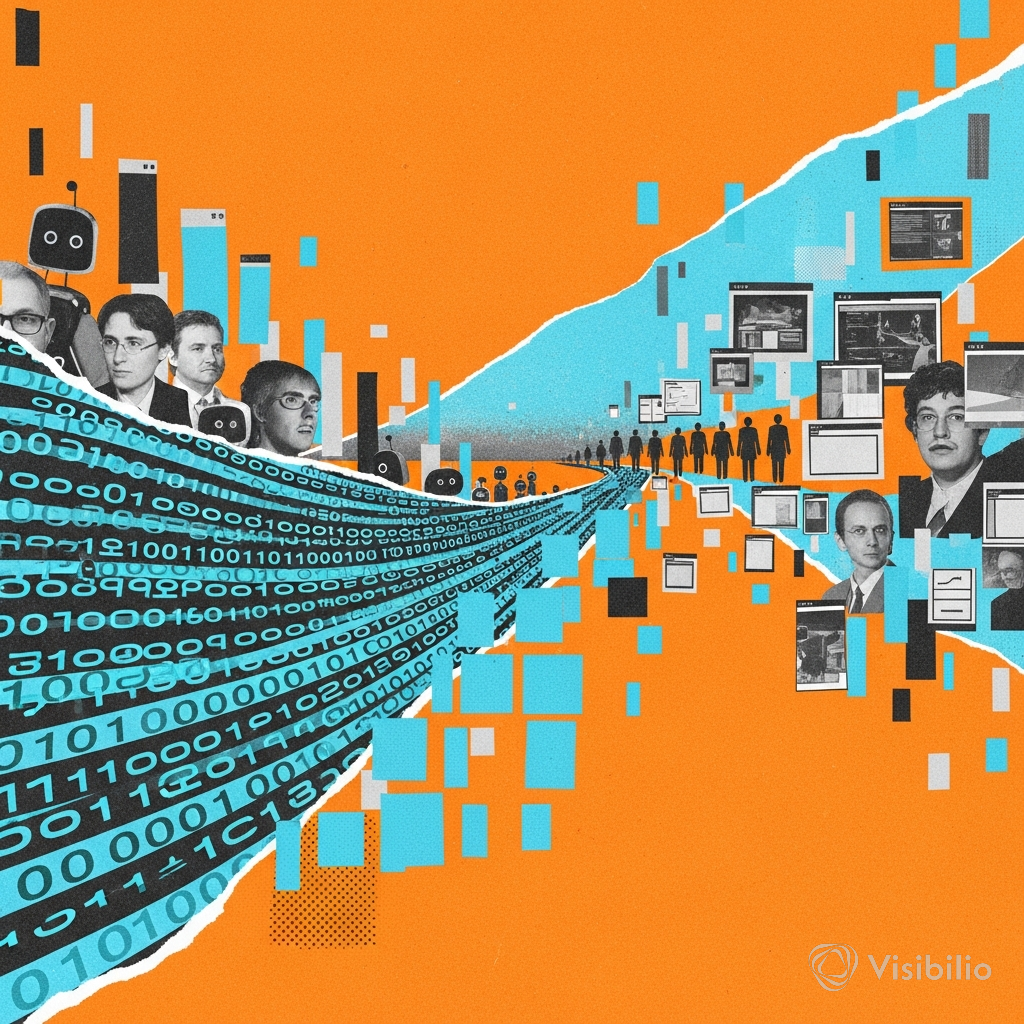
Fifty-seven percent. That's the share of web page requests now coming from bots on Cloudflare's network, according to data the company's CEO Matthew Prince posted on X on June 3, 2026. Humans account for the rest. For the first time in the commercial internet's history, machines are requesting more pages than people.
Prince had predicted this crossover would arrive by late 2027. It showed up 18 months early.
The number deserves a caveat: it measures web page requests across Cloudflare's infrastructure, not the entirety of internet traffic. Prince himself acknowledged the exact crossover date is hard to pin down. But the direction is unmistakable, and it's confirmed independently. HUMAN Security's 2026 State of AI Traffic report, built on more than one quadrillion interactions, found automated traffic grew roughly eight times faster than human traffic throughout 2025. Traffic from AI agents and agentic browsers specifically? Up nearly 8,000%.
Why This Isn't an SEO Story
The instinct will be to file this under "SEO trends" and move on. That instinct is wrong.
AI agents acting on behalf of human buyers don't behave like search engine crawlers of five years ago. They read, extract, summarize, and recommend. They don't generate pageviews. They don't bounce. They don't convert in your analytics dashboard. The metrics that B2B marketing teams have relied on for a decade (sessions, time on page, bounce rate) are increasingly blind to a growing share of how content gets consumed and how brands get discovered.
What matters instead: citation rate in AI-generated answers, share of voice across AI platforms, and referral traffic from tools like ChatGPT (which now has 960 million users including Copilot, pulling 7.4 billion visits monthly). These are the indicators that tell you whether your content is being picked up, trusted, and surfaced when an agent answers a buyer's question on your behalf.
Treating agentic visibility as a subset of SEO means optimizing for a world that's already shrinking.
For the first time in the commercial internet's history, machines are requesting more pages than people
The Consistency Problem Gets Harder
Here's what makes this operationally painful. AI agents don't visit your site once and form an impression. They crawl continuously. Anthropic's bots, for instance, read roughly 4,580 pages for every single visitor they refer back. Google remains the largest verified bot operator at 28.4% of bot traffic, but Anthropic (13.2%), Meta (12.2%), and OpenAI (7.2%) are all pulling content at scale, constantly.
That means your content library isn't a static asset anymore. It's a live feed being read, re-read, and evaluated by systems that penalize staleness, inconsistency, and gaps in topic coverage. Publishing a quarterly whitepaper and calling it content strategy doesn't hold up when agents are scanning your entire domain weekly.
This is where the operating model matters more than any single tactic. Content operations needs to function as a repeatable system: research feeds drafting, drafting feeds structured publishing, structured publishing feeds AI-readable formats, and governance sits across all of it. Not a campaign. A pipeline.
What Consistent Publishing Actually Requires
Most B2B teams understand they should publish more. Fewer have built the workflow to do it without sacrificing quality or burning out a three-person content team.
The shift toward AI discovery raises the bar. Content needs to be structured for extraction (clear headings, specific claims, named data points), published with enough frequency to maintain topical authority across clusters, and reviewed with enough rigor that an AI agent citing your content doesn't surface something outdated or inaccurate. Forty percent of all bot traffic is still categorized as malicious, per the Thales 2026 Bad Bot Report. Governance isn't optional.
This is the problem Visibilio was built to solve. Not by replacing editorial judgment with volume, but by turning the slow, fragmented parts of content production (research, drafting, optimization, formatting) into a governed, repeatable workflow with human review at every decision point. The goal isn't more content. The goal is consistent, structured, high-density publishing that compounds owned audience growth and stays visible to both human readers and the agents acting on their behalf.
The Internal Case Just Got Easier
Growth leaders who've been pushing for investment in AI search optimization now have a concrete data point. Bots are the majority. The crossover already happened. AI training crawling jumped from 22% of crawler requests in spring 2025 to 52% by mid-2026. In North America, bots account for 68.6% of web traffic.
The business case writes itself, but only if the team behind it can actually execute. A strategy deck about agentic visibility means nothing without the content operations infrastructure to publish consistently, maintain quality, and measure what matters (citations, AI referral traffic, share of voice) instead of what's comfortable (pageviews, impressions, posting frequency).
Prince's announcement on X wasn't a prediction. It was a timestamp. The majority of your web audience is already non-human, and the content systems built for a human-only readership are already underperforming. The teams that recognized this early and invested in consistent, governed publishing won't just adapt to the new traffic mix. They'll be the ones the agents cite.