
The Weakest Handoff Decides What Your Automation Is Worth
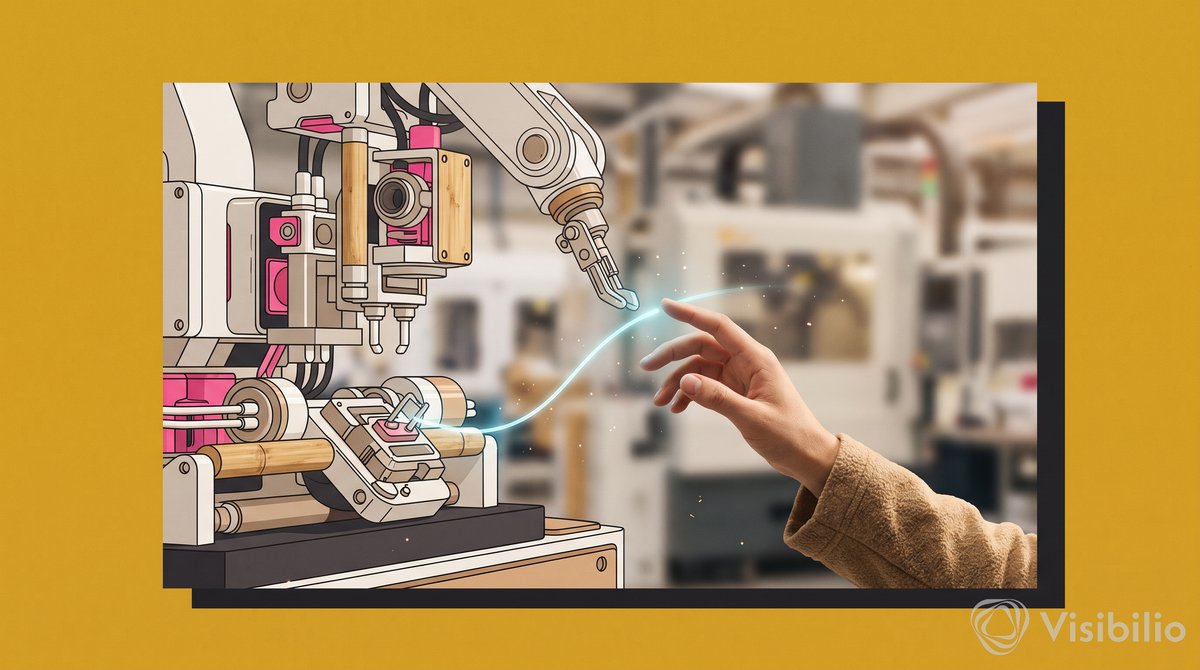
Every automated pipeline has a step where a machine hands work to a person. That step is the whole system.
Automation gets judged by its hardest step. The model that drafts the article, the scraper that survives a hostile site, the scheduler that respects a timezone. Those are the parts that look difficult, so those are the parts that get attention.
The parts that actually decide whether the system is worth anything are the handoffs. Every pipeline that touches a human has a moment where a machine stops and says, in effect, your turn. That moment is not a detail of the system. In practice it is the system.
A chain of nine good links and one bad one is a bad chain
Consider an ordinary content loop. A planner proposes topics. A person approves them. A drafter writes on a schedule, unattended. The draft lands in a review queue. A reviewer approves it. The approval creates a schedule. The schedule publishes to the site. A digest reports what happened.
Eight steps. Suppose seven of them are excellent and one is merely present. Suppose the review notification arrives as an email that says you have content awaiting review and nothing else. No title. No excerpt. No indication of what the machine spent an hour writing.
Every other step still works perfectly. The system is still useless, because the reviewer now has to leave the email, find the application, locate the queue, guess which item the message meant, and open it. The automation saved an hour of drafting and spent five minutes of human attention re-establishing context that it already had and simply declined to pass along.
That is not a small defect. It is the difference between a loop that runs and a loop that gets used.
Every automated pipeline has a step where a machine hands work to a person
Handoffs fail quietly
A broken drafter fails loudly. It throws, it logs, it pages someone. A broken handoff produces no error at all. The email sends. The status code is 200. The queue renders. Nothing in any dashboard indicates that the person on the other end cannot act on what they received.
This is why handoff defects survive so long. They pass every check that a system runs on itself. The only test that catches them is the one nobody automates: give the output to the person it was written for and watch whether they can do the next thing without asking a question.
The tell is a question
There is a reliable signal for a broken handoff. If the recipient reacts with a question the sending system could have answered, the handoff is incomplete.
- Which item is this about? The notification knows. It chose not to say.
- Where do I open it? The link exists. It points at a list instead of the thing.
- What happens if I approve? The next step is deterministic. It was never described.
None of these are hard problems. They are all cases of a system holding information at the exact moment it is handing off, and passing a summary instead of the substance.
Design the exchange, not just the step
The practical correction is unglamorous. For every point where your pipeline hands work to a human, write down what the human will decide, and then check that everything needed for that decision travels with the request.
An approval needs the title, the substance, and the consequence of approving. A failure notice needs what failed and what the system already tried. A digest needs what changed, not what ran.
Adding another agent to a pipeline with weak handoffs does not make it more autonomous. It adds another place where work stops and waits for someone to reconstruct context by hand. The throughput gain is real and the attention cost is real, and the second one is the one nobody measures.
Fix the exchanges first. They are cheaper than a model and they decide more.
Audit your handoffs before you add another agent.