The Audience Marketing Playbook: Owned Media Over Rented Attention
Stop paying for eyeballs. Start earning a readership.

The rental trap
Every dollar you spend on advertising buys a moment. A fleeting impression. The instant the budget stops, the attention vanishes. You are renting reach from platforms that can change the price, the rules, or the algorithm whenever they like, and they frequently do.
This is not a partnership. It is a dependency.
Audience marketing is the alternative. Instead of renting attention, you build a readership you own. People who come back because they want to, not because you paid to interrupt them.
Four principles. No shortcuts.
Audience marketing is not complicated. But it is demanding. It requires consistency over cleverness, and discipline over bursts of inspiration.
Editorial intent. Every piece you publish should serve a purpose beyond filling a calendar. Does this change how the reader thinks about a problem? Would they forward it to a colleague? If the answer to both questions is no, it is not worth publishing. The bar should be: would someone choose to read this even if they had never heard of your company?
Consistent cadence. Audiences form around reliability. If you publish once and disappear for three months, you are not building a readership. You are broadcasting sporadically, and sporadically does not compound. Pick a schedule. Keep it. The frequency matters less than the consistency.
Own your channel. Your website. Your newsletter. Your content hub. These are the channels you control. Social media is distribution, useful for driving people toward what you own. But it is not the destination. Building your entire presence on rented platforms is building on someone else's land.
Measure engagement, not impressions. Impressions tell you how many people scrolled past. That number is vanity, mostly. Track what actually signals attention: return visitors, time on page, newsletter signups, content shared. These are the metrics that reveal whether your work is earning trust or just generating noise.
The compound effect
A single article does not build an audience. Fifty articles, published consistently over a year, with a clear voice and a defined reader in mind? That builds something durable. Something that works while you sleep.
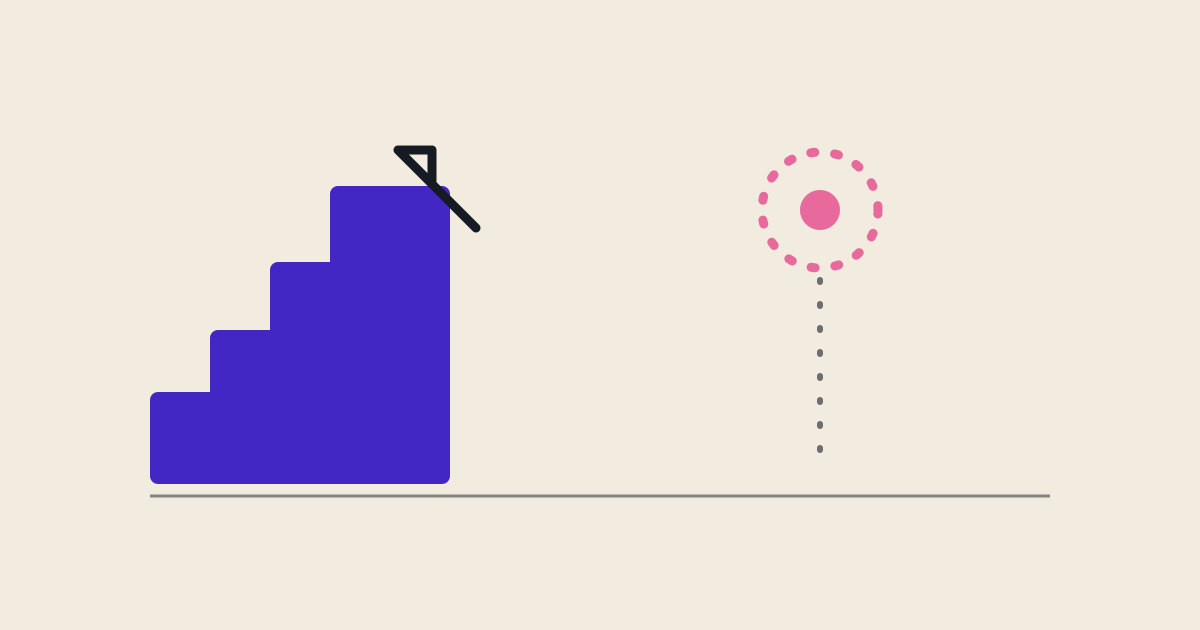
Content compounds. Ads do not. A paid campaign from six months ago generates nothing today. An article from six months ago still draws readers, still builds trust, still earns the click that leads to a conversation. The brands that internalize this difference early will hold a structural advantage that paid media cannot replicate.
Where to start
You do not need a large team. You do not need sophisticated technology (not yet). You need three things: a clear audience, a publishing cadence you can sustain, and content that earns the reader's time.
Everything else, the AI, the automation, the scale, comes after the foundation is right. Get the foundation wrong, and no amount of tooling will save you. Get it right, and the tooling will multiply what you have already built.